Most drug lists teach you what a medicine does. This textbook teaches you what a nurse does about it. For every drug class, you assess the patient, plan the care, give the drug and teach, and then check whether it worked. Exams follow the same pattern. They rarely ask for a drug’s name alone. They ask what you should check first, what you should report, or what the patient needs to hear before going home.
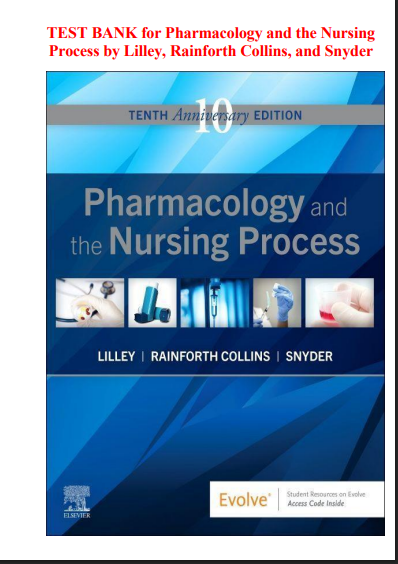
This test bank gives you practice with those questions. It follows the chapter order of Pharmacology and the Nursing Process, 10th Edition, by Linda Lane Lilley, Shelly Rainforth Collins, and Julie S. Snyder, so each study session matches what your class is covering.
If you are in a pharmacology course, getting ready for medication passes in clinical, or reviewing for the NCLEX-RN, this resource helps you practice safe, step-by-step thinking.
Topics Covered
The question sets follow the textbook and include:
- How the body takes in, moves, breaks down, and clears drugs
- The nursing process applied to medication safety
- Legal, ethical, and cultural points in drug therapy
- Preventing medication errors and calculating doses
- Heart, blood pressure, and cholesterol medicines
- Blood thinners and drugs that affect clotting
- Diuretics and fluid and electrolyte balance
- Breathing and allergy medicines
- Antibiotics, antivirals, and antifungals
- Pain relief, including opioids and NSAIDs
- Diabetes, thyroid, and steroid medicines
- Drugs for mood, anxiety, psychosis, and seizures
- Stomach, bowel, and urinary medicines
- Safe drug use in children, pregnancy, and older adults
- Patient teaching, side effects, and warning signs
You will find multiple-choice, select-all-that-apply, and dosage questions, the formats most pharmacology courses use.
Why Practice Questions Help
Reading builds familiarity. Answering questions builds recall under pressure. Practice helps you:
- Connect each drug class to the check you make before the dose
- Notice early signs of toxicity before they become emergencies
- Pick the safest action when several answers sound reasonable
- Teach patients in clear, correct language
- Feel calm on exam day because the question style is familiar
Most students are not defeated by one hard idea. They are defeated by the amount of material. Short, regular practice by chapter holds up better than one long review the night before.
What Makes This Test Bank Different
Each question includes a full rationale. You will see why the best answer is safest and why every other choice is wrong, incomplete, or not the priority. On pharmacology exams, the wrong answers usually sound sensible. Learning why they fail is a large part of the work.
Questions are grouped by chapter and drug class. Review one class before a quiz, or work across several chapters before a final. Use it beside your reading, before a clinical day, or as a last review before an exam.
Sample Questions
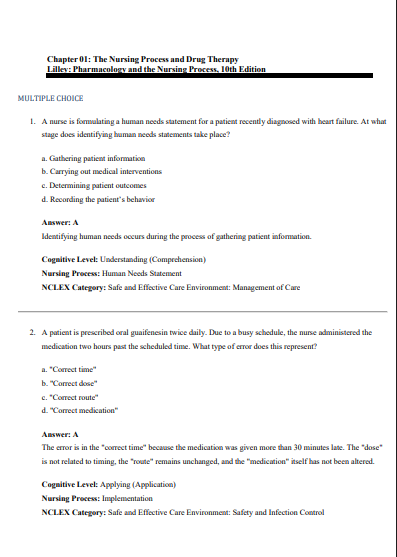
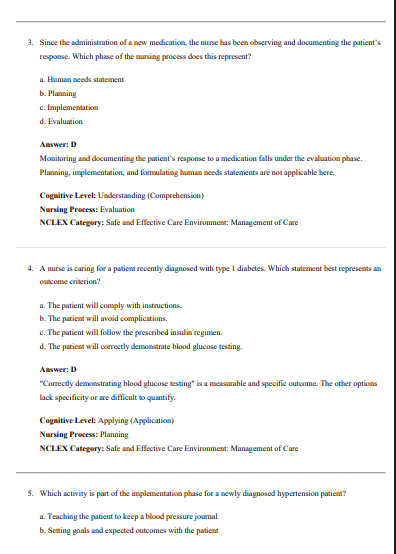
Question 1
A patient arrives in the emergency department four hours after swallowing 40 acetaminophen tablets. The patient has no symptoms yet. Which medication should the nurse expect to be ordered?
A. Naloxone
B. Acetylcysteine
C. Flumazenil
D. Vitamin K
Correct Answer: B
Rationale: Acetaminophen overdose can cause severe liver damage, even when the patient feels well at first. Acetylcysteine is the antidote. It works best when started early, and the provider will use the time since the overdose and the drug level to guide treatment. Naloxone reverses opioids. Flumazenil reverses benzodiazepines. Vitamin K reverses warfarin.
Question 2
A patient is starting lithium for bipolar disorder. Which statement by the patient shows correct understanding?
A. “I will cut back on salt and fluids to avoid swelling.”
B. “I will keep my salt and fluid intake steady, and I will call if I have vomiting, diarrhea, or a coarse tremor.”
C. “I will stop the medicine when I feel calm.”
D. “I will take extra doses on stressful days.”
Correct Answer: B
Rationale: Lithium levels depend on sodium and fluid balance. Low sodium or dehydration, from heavy sweating, vomiting, or diarrhea, makes the body hold on to lithium, which can lead to toxicity. A steady intake helps keep levels stable. Vomiting, diarrhea, and a coarse tremor are early warning signs and should be reported. Cutting back on salt and fluids raises the risk. Stopping the drug on one’s own or adding extra doses is unsafe, since the dose must be guided by blood levels and the provider.
Question 3
A patient taking warfarin asks whether to stop eating green leafy vegetables. What is the nurse’s best response?
A. “Yes, avoid all foods that contain vitamin K.”
B. “Try to eat about the same amount each week, so your dose stays reliable.”
C. “Eat as many as you like, since they do not affect warfarin.”
D. “Eat them only on the days when your INR is low.”
Correct Answer: B
Rationale: Vitamin K works against warfarin. Large changes in intake can make the INR swing up or down. The goal is a steady, normal intake, not avoidance, so the dose can be adjusted to match. Avoiding all vitamin K foods is not needed and may lower nutrition. Saying they have no effect is wrong. Eating them only on certain days creates the swings the nurse wants to avoid.
Question 4
A patient receiving IV morphine for pain has a respiratory rate of 8 breaths per minute and is hard to wake. What should the nurse do first?
A. Give the next scheduled dose and recheck in 30 minutes
B. Hold the morphine, stimulate the patient, support breathing, and prepare to give naloxone as ordered
C. Raise the head of the bed and leave the patient to rest
D. Wait to see whether the rate improves on its own
Correct Answer: B
Rationale: A slow breathing rate and difficulty waking are signs of opioid-induced respiratory depression. This is an emergency. The nurse should stop the drug, wake the patient, support breathing, and call for help, and naloxone is given as ordered to reverse the effect. Giving more morphine would worsen the problem. Leaving the patient to rest or waiting could allow breathing to stop.
Question 5
A 70-year-old patient taking ciprofloxacin and prednisone reports sudden pain in the back of the ankle. What should the nurse advise?
A. Walk more to loosen the joint
B. Stop the drug, rest the leg, and contact the provider right away
C. Apply heat and continue the drug
D. Expect this to improve on its own
Correct Answer: B
Rationale: Fluoroquinolones, such as ciprofloxacin, carry a warning for tendon inflammation and rupture. The risk is higher in older adults and in people who also take corticosteroids. Sudden pain near a tendon, especially the Achilles, should be reported at once so the drug can be stopped and the leg protected. More activity can lead to a rupture. Heat and waiting both delay care.
Frequently Asked Questions
Is this the same as the publisher’s official test bank?
No. This is an independently written study resource meant to help you review the topics in Pharmacology and the Nursing Process. It is a self-study companion and is not distributed by the publisher.
Will it help me prepare for the NCLEX-RN?
Yes. The scenario style is similar to licensure exam questions. It focuses on assessment before dosing, priority actions, and patient teaching.
Does it cover every chapter?
Yes. The questions follow the chapter order of the textbook, from basic pharmacology and the nursing process through each major drug class and special groups.
What kinds of questions are included?
Mostly multiple-choice, plus select-all-that-apply and dosage questions.
Are there explanations?
Yes. Every question has a full rationale that explains why the best answer is correct and why the other options are not.
Who is it for?
Nursing students taking a pharmacology course, and anyone reviewing drug safety before an exam.
How should I use it?
Read the chapter first, then try the questions before looking at the answers. Study the rationales for anything you missed, since knowing why an answer is correct helps more than memorizing the letter.
Can it replace the textbook?
No. It works best alongside the textbook. The book teaches the drug classes and the nursing process, and the test bank gives you practice applying them.
Is it matched to the edition I own?
This version follows the 10th edition. If you use a different edition, tell me and I can match it.
Is it useful the night before an exam?
Yes. Because it is organized by chapter and drug class, you can quickly review one area, such as anticoagulants or opioids, without rereading the whole book.


SimVault –
Great questions and useful explanations.
Swagridy –
Helped me understand difficult topics
Tonnyjakes –
Excellent practice for nursing exams.
Ahan –
Questions closely match exam topics
John Peter –
Really improved my study sessions
Eva Mash –
Great tool for reviewing concepts
Zack Evans –
Great tool for nursing practice
Victoria Mahnam –
Helpful explanations improved my understanding.
Harry –
Saves time when preparing for tests.
Maximevan –
A useful nursing study resource.
Joyce Silva –
Useful questions with detailed rationales
Joe Terry –
Excellent support for nursing studies
Tonny Jakes1 –
Fantastic resource for exam practice
Nancy Ann –
Easy to use and understand
Sharon –
Great study resource for nurses
Frank Palmon –
Boosts confidence before nursing exams
Harry Jans –
Makes nursing concepts easier to understand.
Faravan Denberg –
Fantastic support for nursing education.
Harry Jons –
Very practical and easy to navigate.
Faravan Denberg –
A helpful companion for nursing students.